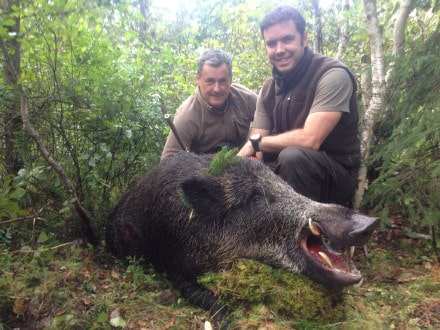
Wild Boar Hunting in Estonia
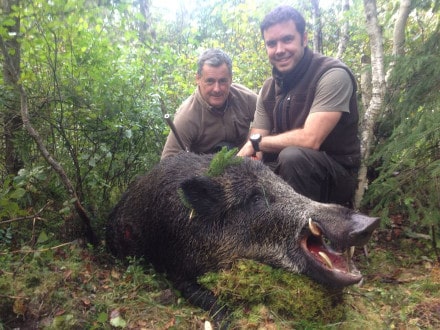
Wild boar can be hunted year-round. Wild boar is normally hunted from stands or by stalking, although the best period for wild boar hunting is in winter when the ground is covered in snow. During that period, it is easier to identify the location of wild boar, which are normally hunted in driven hunts using dogs.
Wild Boar in Estonia
During recent years, the wild boar population in Estonia has been affected by African swine fever, greatly reducing its population in most of Estonian territory.
However, we still have areas with sufficient density to organize wild boar hunting. Additionally, on Hiiumaa Island, African swine fever has not arrived and the wild boar population continues to be very abundant.
Wild boar hunting is permitted year-round, although hunting of females with young is only permitted from October until the end of February.
Wild Boar Stalking
Wild boar stalking is normally done in summer in grain fields and over bait sites, although hunting of this species is permitted year-round. This hunt is probably the most interesting wild boar hunt since it requires the hunter to demonstrate great skills to approach the wild boar silently while maintaining composure to make a precise shot.
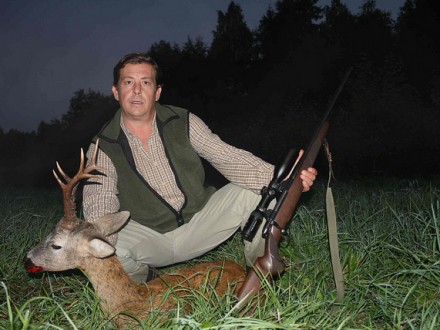
This hunt is perfect to combine with roe deer stalking since it takes place on the same dates and reserves.
How the Hunt Works
Wild boar stalking is mainly done in summer when we have almost 20 hours of daylight. Two outings are made per day, one in the morning and one in the afternoon.
The first outing starts at 4 AM when we traverse the grain fields using one of the off-road vehicles and are always accompanied by one of our guides. As soon as a specimen is located, we proceed to make a careful stalk taking into account the wind as well as ensuring a shot with guarantees is possible. This morning hunt normally lasts between 4 and 5 hours.
The second part of the hunt takes place in the afternoon, leaving the accommodation at 6 PM, and the procedure is the same as in the morning.
During this hunt, it is very likely to find roe deer in the same fields, which is why combining the two species is recommended.
Characteristics of Wild Boar Stalking
This hunting method is normally very productive and the largest wild boar are normally hunted using this method since they are easier to see and their approach does not normally present many difficulties for an experienced hunter.
It is recommended to bring good binoculars and a scope with high magnification since shots up to 150 meters are not uncommon. Regarding caliber, we recommend a high caliber with a very flat trajectory. Since wild boar hunting is combined with roe deer hunting, it is also recommended to bring different types of bullets depending on the species to be harvested.
Wild Boar Hunting with Dog
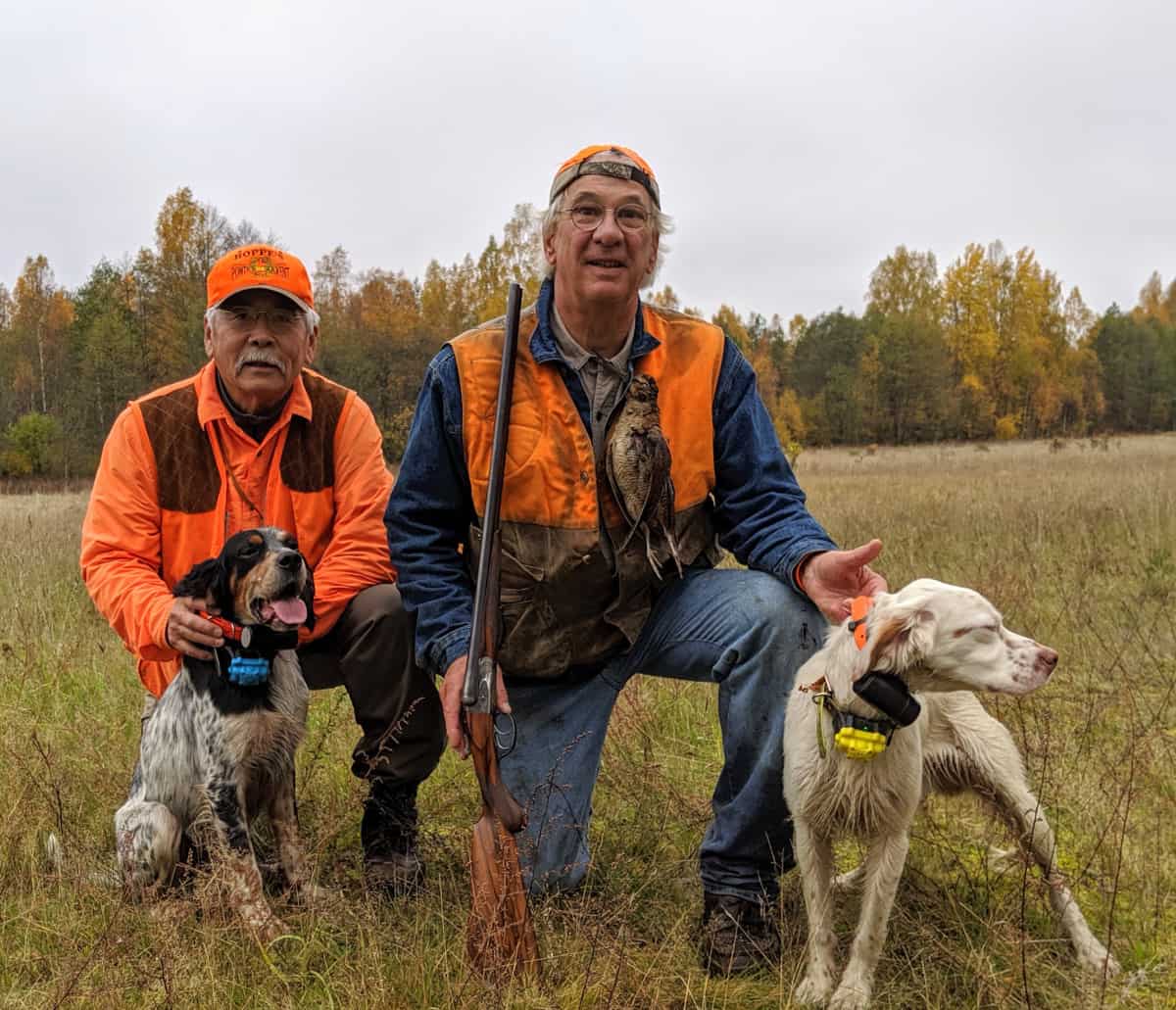
Wild boar hunting with dog is permitted from October 1st until the end of February, although wild boar hunting is permitted year-round and can be hunted from stands and by stalking. In this hunt, Nordic hunting dogs are used which follow the wild boar track until they locate them, then begin barking, thus indicating to the hunter the presence of wild boar.
How the Hunt Works
At dawn, we will move to the hunting area to search for fresh wild boar tracks on both trails and bait sites. We will also use information obtained through trail cameras located in various areas of the reserve, mainly at bait sites.
Once we have an idea of the location of the wild boar and depending on the type of wild boar to be harvested, we will put the dog on the track and follow the dog using a GPS and radio frequency device that will help us know at all times where the dog is located.
Once the dog locates the wild boar, it will start barking which will help us understand the situation. Normally, large groups of wild boar will hold their ground against the dog, so the hunter will have to approach the group together with one of our guides and try to resolve the situation. In the case of smaller groups or even solitary wild boar, wild boar normally try to distance themselves from the dog, so they will start running to try to free themselves from the pressure the dog exerts. The hunter will move to one of the many trails in the reserve and try to cut off the wild boar's trajectory, normally having a clear and intense opportunity.
The hunt lasts approximately 6 hours and this hunt allows us to have several opportunities per day.
Characteristics of Wild Boar Hunting with Dog
Without a doubt, this type of wild boar hunting is the most exciting and where you have the most opportunities. The best conditions for wild boar hunting with dogs are cold days with fresh snow and preferably little or no wind.
This hunting method requires the hunter to have an acceptable physical level since many opportunities require movements in the forest of up to 2 kilometers or short movements at a trot or run.
Wild Boar Hunting from Stands
Night stand hunting for wild boar is done year-round, although the best periods are summer, when combined with wild boar stalking, and winter when combined with wild boar hunting with dogs.
This hunting method is very effective and it is not uncommon for each night on stand to have at least one opportunity.
How the Hunt Works
This hunting method is done exclusively over prepared bait sites where wild boar go daily to obtain their much-needed food. At each bait site, we have high seats that will help us hide from the sight and smell of the wild boar.
In summer, wild boar normally enter the bait sites fairly early; however, in winter wild boar are more wary and their entry to the bait sites normally occurs late at night.
The largest wild boar tend to be very cautious and the hunter needs to be patient and avoid making any movement or sound that could betray their presence.
Shooting is not normally done at more than 60 meters and it is recommended to use a significant caliber since wild boar in Estonia normally reach 200 kilograms in weight.
Characteristics of Wild Boar Hunting from Stands
Wild boar is an animal with very developed instincts as well as having a very keen sense of smell and excellent hearing.
Large groups show little caution, making their hunt fairly easy, although large males always represent a great challenge.
Since we have trail cameras at the bait sites, we know at all times which specimens are entering, so the hunter will be informed of the presence or absence of large males. It is very important that the hunter be patient and discard all smaller wild boar that normally accompany large wild boar and serve as squires.
Information about Wild Boar (Sus scrofa)
Its scientific name is Sus scrofa. Medium-sized mammal of the pig family. They are quite sociable, living in matriarchal groups (sounders) formed by females and their young. Adult males become increasingly solitary as they age. The oldest and largest female is the dominant one. Males are sometimes accompanied by another younger male (the squire). They are not territorial animals. They can live about 12 years. Their eyesight is not very developed, unlike their sense of smell and hearing. It is one of the 100 most harmful invasive exotic species in the world.
Physical Description
They have a fairly pointed and large head compared to the rest of the body, a thick neck and very short legs. It is a very strong animal. Its body is covered by dark bristles of 10-15 cm under which they have a softer, curly coat that protects them from the cold (the underfur). The coat is grayish in summer and darker in winter. Males have very sharp and pointed lower canines curved backward that can measure up to 25 cm; the upper ones are smaller. These lower canines begin to protrude from the male's mouth around two years of age and by age 5 begin to curve. Males can weigh up to 300 kg and females 150 kg.
Distribution and Habitat
They can be found in Europe, America, Africa, and Asia. Their level of adaptation is very high, being able to be found anywhere with food, tall vegetation to camouflage in, and water to drink and for their mud baths that serve to regulate body temperature (since they cannot sweat; their sweat glands are blocked) and as social activity.
Diet
They are omnivores, feeding on everything they find. Their great sense of smell allows them to detect truffles, plants, or animals underground. They normally eat mushrooms, reptiles, eggs, insects, birds, rodents, tubers, roots, acorns, and fallen fruits. They do not disdain carrion either.
Reproduction
Females reach sexual maturity between 8 and 20 months and males around 10 months. The mating season takes place from November to January. During this period, the male tirelessly searches for females to mate with. Upon finding a sounder, he fights with other males using his tusks, and the winner will cover the females in the sounder. The female's gestation period lasts between 16 and 20 weeks, after which she will give birth in a nest she has previously built to about 7 piglets.